State Ballots Are Carrying Heavy Political Weight
Congress will not be the only place where major political battles are decided in the 2026 election cycle. More than 140 measures across 40 states are expected to address voter identification, abortion, data centers and other hot-button issues. Several states, from Virginia to California, are asking voters whether to amend their constitutions on elections and social issues. The ballot is doing overtime. Among the most consequential proposals are abortion measures in Idaho, Virginia and Missouri. Measures in Virginia and Nevada would place abortion protections in their state constitutions before fetal viability, which occurs at about 24 weeks of pregnancy. That means voters will be deciding questions that usually produce years of legislative fights and court battles.
Virginia’s Two Questions Bring a Fierce Fight
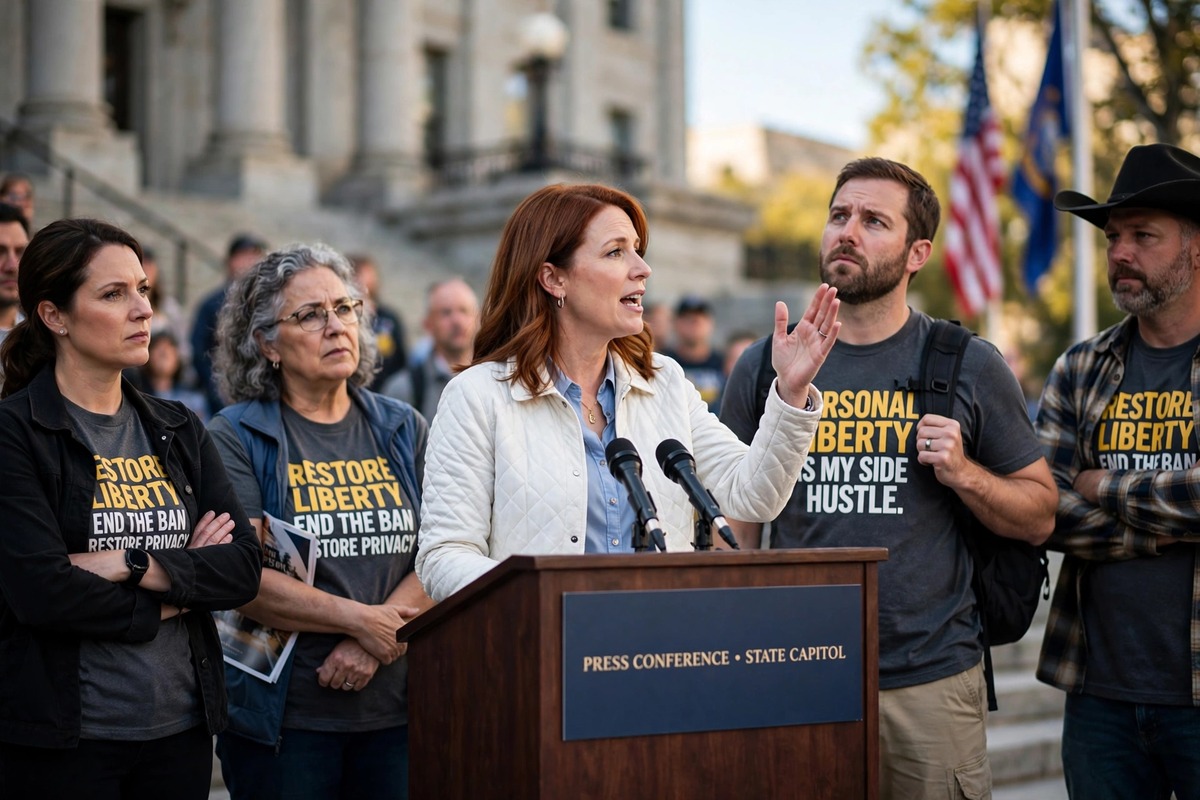
Virginia’s Question 1 would prevent laws from restricting what it calls “personal decisions” about prenatal care, birth control and postpartum treatment, according to the Virginia Department of Elections. Democratic state lawmakers advanced the abortion-rights amendment in January for the November ballot. Bishop Michael Burbidge of the Diocese of Arlington urged Virginians in a Sept. 12 letter to join the Catholics Vote No campaign and oppose Questions 1 and 2. He argued that Question 1 could allow abortions through birth, extend the proposed right to minors and reduce the role of parents in life-altering decisions for their daughters. Question 2 would remove Virginia’s constitutional ban on same-sex marriage if the Supreme Court overturned Obergefell v. Hodges, the decision that found state bans unconstitutional. Democratic Gov. Abigail Spanberger and Attorney General Jay Jones support both amendments. Catholic parishes, including the Basilica of St. Mary in Alexandria, have registered parishioners through the Catholics Say No campaign. The Virginia Catholic Conference says the Dioceses of Arlington and Richmond have more than 693,000 registered Catholic voters.
Idaho and Missouri Offer Opposing Abortion Paths
Idaho voters will consider an initiative that would overturn the state’s near-total abortion ban and establish a right to abortion until viability. Idaho’s 2020 law permits abortions only in cases involving rape, incest or the life of the mother. Abortions outside those circumstances can bring a prison sentence of two to five years. Missouri voters face a different choice. Amendment 3 would repeal the state’s 2024 abortion-rights amendment, then ban nearly all abortions and prohibit trans-related surgeries for minors. Taken together with the proposals in Virginia and Nevada, these measures show how sharply state abortion policies could diverge. Voters are not simply choosing candidates. They are being asked to keep, expand or reverse rules that govern medical decisions.
California’s One-Time Tax Comes With a Large Asterisk
California’s Legislature introduced Proposition 40, which would impose a one-time tax of 5% on the wealth of billionaires. The California Budget & Policy Center says the measure could raise tens of billions of dollars for education services, health, nutrition and other programs. The estimates come with considerable uncertainty. The Legislative Analyst’s Office said the measure would likely raise “tens of millions” of dollars in the near term and could reduce state income-tax collections by roughly $1 billion each year. The proposal would create a 2026 Billionaire Tax Reserve Fund. Its supporters say the money would provide assistance after federal and state cuts to health care, food assistance and K-14 public education programs. Critics cited by the California Budget & Policy Center question whether a one-time tax, available for only a few years, can support ongoing needs. Tax policy meets accounting, and accounting rarely arrives with a drumline.
Why It Matters
These measures matter because they move major policy disputes out of committee rooms and into state constitutions, where changes can be difficult to unwind. Voters are not facing one single question. They are weighing rules about abortion, parental involvement, marriage language, public services and taxation. That affects patients, parents, minors, taxpayers, schools, health programs and the religious and political groups organizing around the vote. It also means a midterm ballot can reshape daily policy even when national politics gets most of the attention.
The open questions are as important as the campaign promises. In Virginia, voters must decide how far the proposed language reaches and what role parents would retain. In Idaho and Missouri, the issue is whether voters keep existing rules or replace them with sharply different ones. In California, the dispute is not only how much money a tax might raise, but whether a one-time stream can reliably support public needs. The estimates show why the fine print matters: large promises can rest on uncertain revenue.
The broader lesson is that state constitutions are becoming a favored battleground for issues that legislatures and courts have not settled to everyone’s satisfaction. Campaign groups on both sides are organizing voters, Catholic parishes are mobilizing parishioners, and elected officials are taking clear positions. That makes the ballot language crucial. A short phrase can govern medical decisions, tax collections and access to services long after campaign signs disappear. The practical question for voters is whether the promised result matches the actual text.
Source: The Liberty Daily