
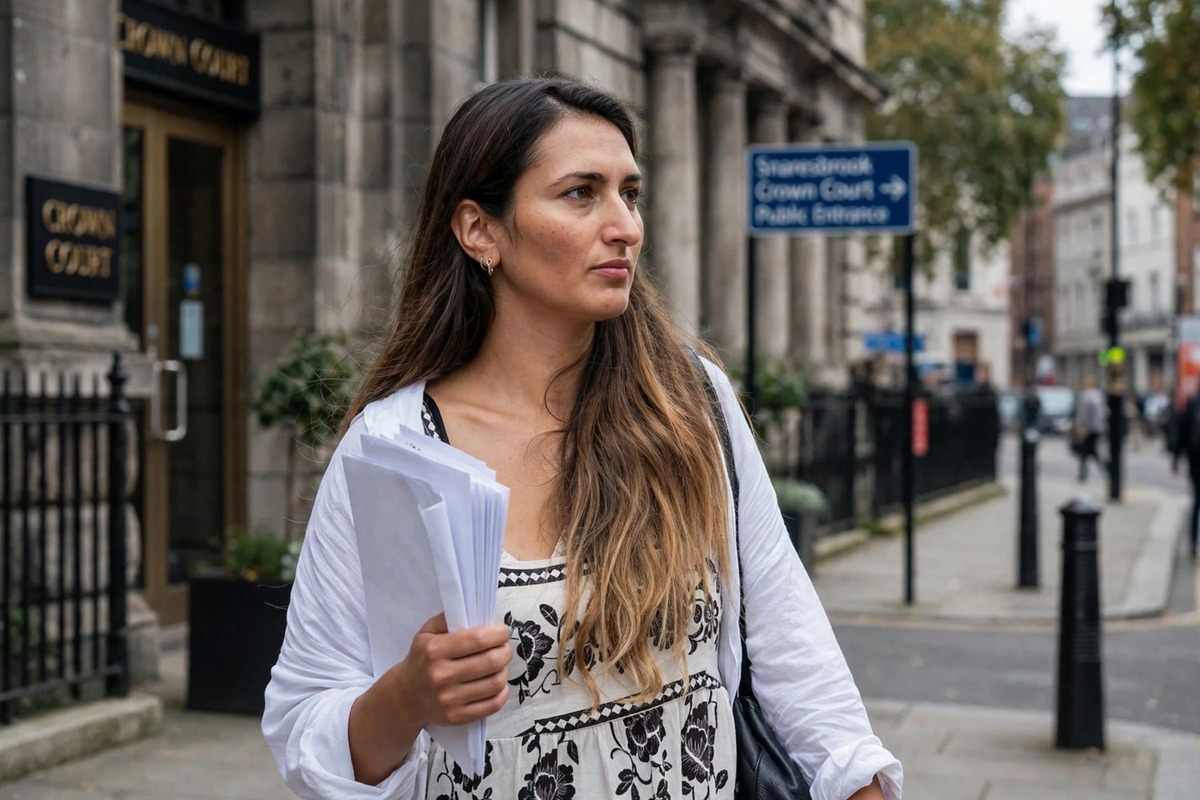
What Happened in West London
Mahrah Al Nahyan, 32, a member of Abu Dhabi’s ruling family through marriage, was found slumped against railings on a busy street in west London, according to evidence heard in court. An unconscious man was beside her, while a barefoot three-year-old child played nearby without adult supervision. Concerned members of the public moved to protect the child after the toddler wandered toward traffic and then alerted police. Prosecutors said the child also ran toward the road while chasing a piece of paper before a passerby stopped them. Al Nahyan reportedly remained unconscious for about 30 minutes. When she woke, she directed a bizarre tirade at those who had intervened, asking why they were so worried. Bystander footage showed her on the pavement near a scooter and toy airplane.
Une membre de la famille royale d'Abu Dhabi a été retrouvée effondrée dans la rue après une overdose alors qu'elle s'occupait d'un enfant de trois ans, a-t-on appris devant le tribunal.
Mahrah Al Nahyan, 32 ans, a été retrouvée affalée sur une rambarde près d'un homme… pic.twitter.com/qi48BF5Vsg
— Claire Langoulant ⚜️♛ (@Cuisines1974) October 14, 2026
What the Court Heard
Police found drug paraphernalia among Al Nahyan’s belongings, but no illegal substances were recovered. Prosecutors said the circumstances amounted to child neglect, and Al Nahyan pleaded guilty to one count in Southwark Crown Court. Her attorney, Stephen Vullo KC, told the court that she had not consumed drugs on the day of the incident. He said she was exhausted after using cocaine in the preceding days. Vullo said she intended to complete a three-month treatment program, then rent a property in the Guildford area and continue care as a day patient while attending Narcotics Anonymous. Al Nahyan had been receiving treatment at the Priory rehabilitation center in Surrey since July. The court also heard that she receives a monthly allowance of about $10,700. Her attorney said she had made a grave mistake and understood it.
The Judge’s Warning
The judge condemned what the court described as a reckless disregard for the child’s safety. The warning was stark: without the intervention of strangers, the toddler could have been seriously injured or killed. The judge said leaving the child barefoot in the street while Al Nahyan was under the influence of drugs showed recklessness and disregard. The court also focused on the child’s movement toward vehicles, a detail that turns the case from private disorder into a public safety emergency. The judge’s remarks put the child’s immediate safety at the center of the hearing, alongside the information about treatment and recovery.
Why It Matters
This case matters because a child’s safety depended on strangers noticing a danger that the responsible adult could not manage. The immediate issue is not royal status or an unusual street scene. It is the basic duty to watch a young child and act before a roadway turns a moment of neglect into permanent harm. The court’s account also shows how quickly an unattended child can move from play to danger, especially when the nearby adult is unconscious. That makes the public intervention central to the story, not a side detail.
The case also puts addiction and accountability in the same frame. Treatment may address the cause of the adult’s collapse, but it does not erase the risk created for the child. The reported plan for continued care and recovery raises practical questions about supervision, follow-through, and whether the child will be protected while that process continues. The court heard one account about no drug use on the day and a judge’s assessment of reckless conduct, leaving the central responsibility clear even as the treatment details develop. The allowance and family connection may make the case more eye-catching, but they do not change the safety standard applied to an ordinary child in an ordinary street.
Source: The Liberty Daily
