A New Class of Battlefield Equipment
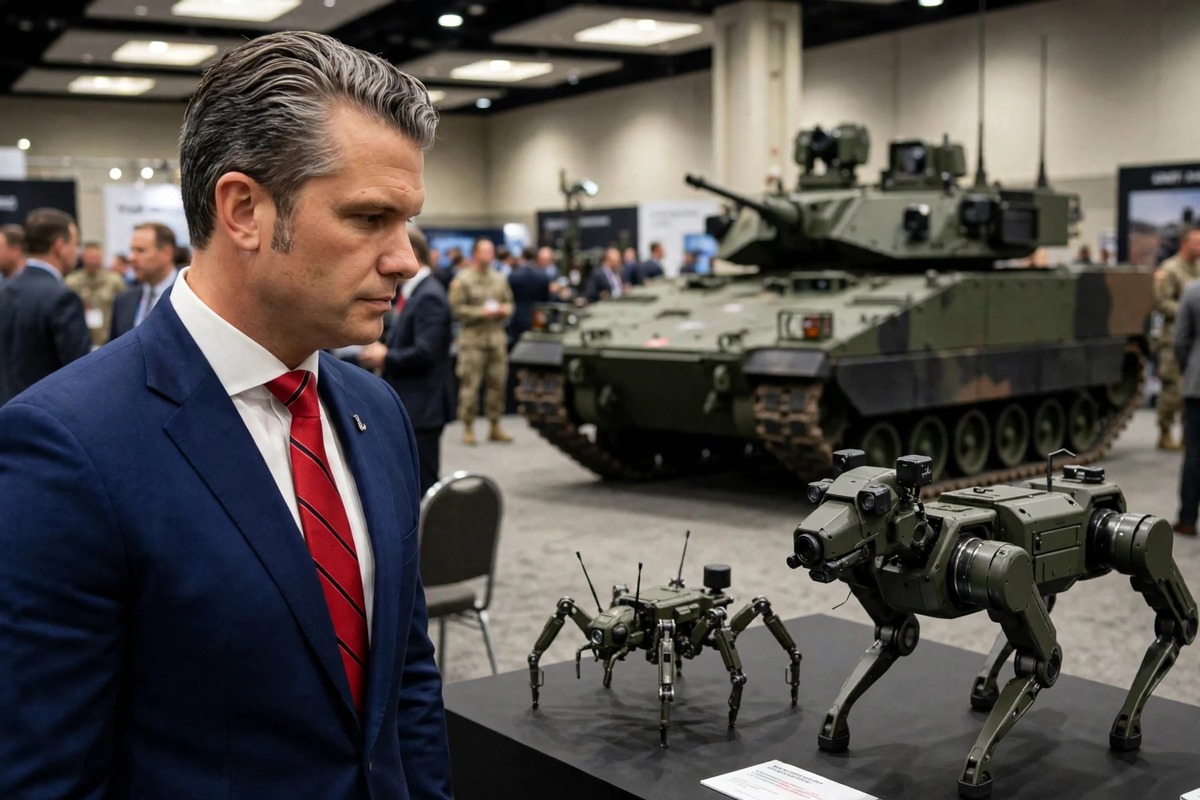
The annual Association of the United States Army convention in Washington offered a look at the military hardware of tomorrow, including unmanned ground vehicles, or UGVs. The systems on display ranged from massive armored fighting vehicles and tanks to platforms resembling dogs and insects. The defense industry may prefer the tidy acronym, but the machines are plainly built for serious work. They are part of Project Agincourt, a program Secretary of War Pete Hegseth created to move the U.S. military toward autonomous warfare on an expedited timeline. During a conference roundtable, Hegseth said the effort began with drone dominance and followed an executive order from the president. He also said the effort received one billion dollars, with the money sent directly to operators in the field.
The AMPV Can Fight With or Without Its Robot Package
The largest UGV at the convention was the AMPV, or Armored Multi-Purpose Vehicle, built by BAE Systems. The company describes it as a hybrid platform that can be used in either manned or unmanned configurations. Bill Sheehy, BAE Systems’ vice president of ground maneuver platforms, said five variants are already being delivered to the Army and that more than six hundred have been fielded. He said the autonomous version grew out of a request from Hegseth for defense companies to organize themselves, fund their own work, and bring solutions to the battlefield quickly. In autonomous mode, the vehicle can handle routine resupply missions with help from cameras, artificial intelligence, and sensors developed by Forterra Autonomous Mission Systems. Without that package, it can still be used for offensive or defensive combat operations, much like the Bradley fighting vehicle already used by the Army.
The Hardware Is Built to Shoot, Too
The Army has also been evaluating AMPVs fitted with thirty-millimeter cannons at Fort Hood, Texas. Sheehy said the cannon can fire an air-burst round, giving infantry a way to engage troops in trenches or behind walls. A semi-active radar on the front is designed to address the drone threat now seen on battlefields. The cannon-equipped AMPV recently passed gunnery qualifications with a distinguished ranking, the highest possible score. That result gives the autonomous vehicle pitch a useful layer of credibility. It is not just a machine that can move supplies while humans watch from a safe distance. Depending on how it is configured, it can also carry a serious weapon and operate in a combat role. The sales brochure, in other words, has learned to multitask.
Autonomy Is Also A Logistics Plan
The push does not stop at combat vehicles. The systems are also being presented as a way to reduce the number of personnel needed for medical evacuations, resupply runs, and other routine operations near the front line. GM Defense displayed a brand-new, one-of-one autonomous version of a GMC 3500 pickup at the convention. It used an all-wheel-drive, dual-rear-wheel design, but the crew cab had been removed and replaced with a flatbed area that could be fitted with a mobile medical facility. The broader pitch is straightforward: machines could take on repetitive and dangerous transportation work while soldiers remain available for other missions. That promise may be less dramatic than a robot tank, but logistics is where military plans either become useful or remain expensive showroom furniture.
Why It Matters
The stakes are both practical and strategic. More autonomy could reduce the exposure of service members during routine missions, especially when vehicles are moving supplies or supporting medical work near the front line. At the same time, putting machines into combat raises questions about how much human control remains, how mistakes are handled, and who is responsible when an autonomous system behaves differently from what its operators expected.
The people most affected would include troops who operate, maintain, and work beside these vehicles, along with commanders who must decide when an autonomous package is trusted. The source describes a shift broader than a single robot project. It covers weapons, resupply, medical evacuation, and defenses against drones. That makes the promise larger, but it also makes the rules harder to hide inside a procurement document.
The open question is whether speed will outrun oversight. Project Agincourt is built around moving quickly, and manufacturers are being pushed to deliver battlefield solutions quickly as well. The military still has to show where human judgment enters the process, how these systems are tested in real conditions, and how responsibility is assigned when autonomy meets confusion. A machine can carry a load or hit a target. Deciding when it should do either remains the harder assignment.
Source: The Liberty Daily