
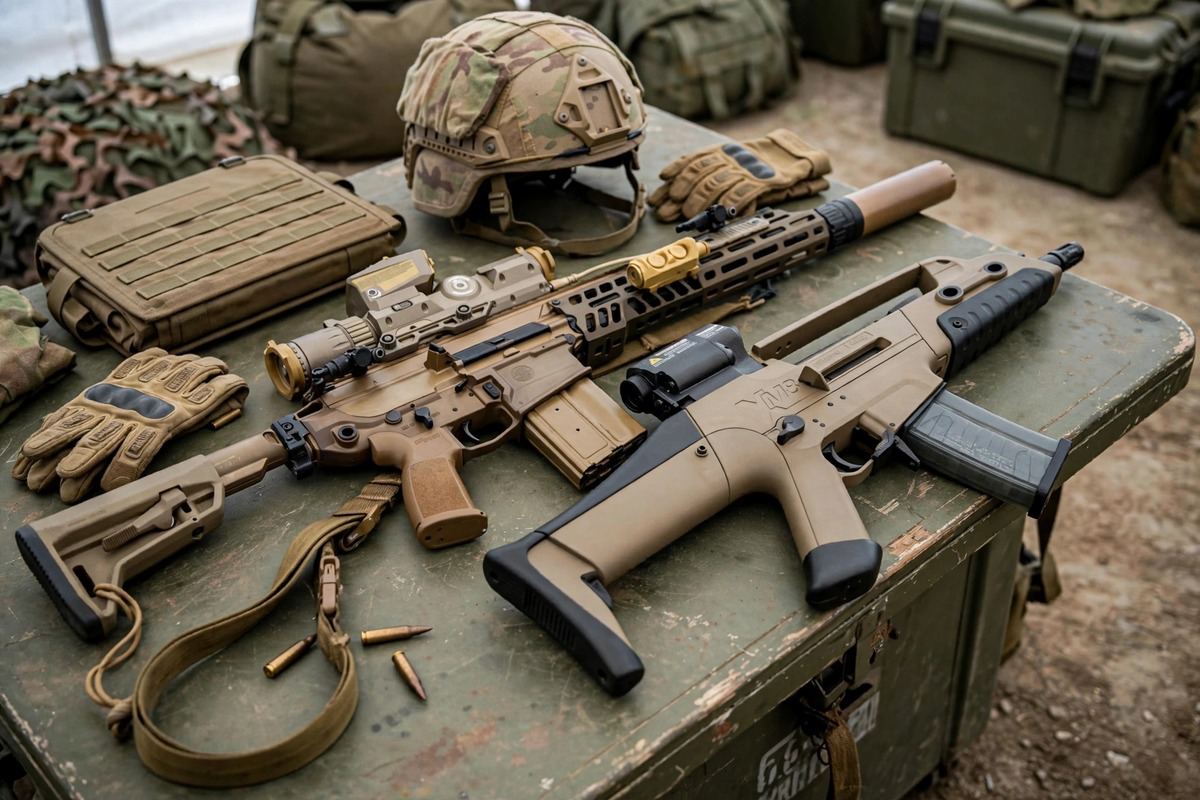
A Rifle Under Scrutiny
The Army is facing criticism over the fielding of the M7 rifle, a weapon selected under the Next-Generation Squad Weapons program. The report says the M7 is being replaced by the M8 carbine starting in December. Later, a Department of Defense spokesperson refers to the XM8 and says it is set to replace the M4A1 carbine for Soldiers in the Close Combat Force beginning in FY27. Military procurement has produced a familiar bureaucratic plot twist: a rifle presented as a next-generation answer is already making room for a lighter successor. The central complaint is simple. The M7 may offer more capability, but troops still have to carry it, use it, and keep it working.
Why the M7 Drew Fire
With a suppressor, the M7 weighs 9.8 pounds. It uses a 20-round magazine, has a 13.5-inch barrel, and can be fitted with an optical sight. Those specifications helped fuel criticism on social media. One post claimed the rifle weighs 50% more than an M4, carries too many unnecessary tactical features, depends on special ammunition made by one monopoly supplier, and can fall apart under stress. The post capped its critique with a joke about the rifle needing a QR code and frozen touchscreen to complete its image of overengineered American technology. The claims came from a social-media critic, not from the Army’s official description, but they capture the practical concern facing the program: added capability is not free when the person carrying it pays in weight, parts, and logistics.
Why the Army Started Over
The NGSW program came after the 2017 Small Arms Ammunition Configuration study. That study validated a need for greater energy on target and reduced shooter error through advanced fire control. It also addressed limits in the existing 5.56 mm and 7.62 mm systems against protected and unprotected threats at extended ranges. SIG won a ten-year contract in 2022 to produce the program’s rifle and light machine gun, both designed to fire a new 6.8x51mm round. The effort is described as the first major rifle and automatic rifle fielding of this nature in roughly 65 years. The package is not only about the M7. It also includes the M250 light machine gun, which is intended to replace the M249 Squad Automatic Weapon in front-line infantry units.
What the XM8 Changes
The XM8 addresses the most visible complaint with a lighter and shorter design. It weighs 8.8 pounds with a suppressor, compared with the M7’s 9.8 pounds. It has a 25-round clip and an 11-inch barrel, compared with the M7’s 20-round magazine and 13.5-inch barrel. The Defense Department spokesperson said the XM8 is approximately 3.5 inches shorter and over a pound lighter than its M7 predecessor, offering advantages on the modern battlefield. The stated transition also involves the M4A1, which the XM8 is set to replace for Soldiers in the Close Combat Force. In plain English, the Army’s answer to a heavy rifle is a lighter carbine, although that does not automatically settle every question about the larger weapons program.
Part of a Long Replacement Chain
The M7 was slated to replace the M4 carbine, a shorter version of the M16 assault rifle first fielded in the 1960s. The M4, in turn, replaced the World War II-vintage M3 “grease gun,” a submachine gun chambered for the .45 ACP cartridge. That history shows the Army has repeatedly changed its standard small arms as it tries to match equipment to battlefield needs. The XM8 now enters that same chain, carrying the Army’s promise of a lighter package while inheriting the scrutiny that followed the M7.
Besides weighing 50% more than an M4, this POS is heavily overloaded with janky tacticool features, takes special ammo produced by one monopoly supplier, and falls to pieces under stress. All it lacks to be a true exemplar of American tech is a QR code and frozen touch screen. https://t.co/kt2qmRwJH7 pic.twitter.com/zJKfaWg9SA
— Seth Harp (@sethharpesq) October 8, 2026
Why It Matters
The stakes are practical, not just ceremonial. Soldiers in close combat and front-line infantry units are the people who must carry, fire, maintain, and trust these weapons. A lighter carbine could reduce the burden identified in the criticism, while the larger program promises more energy at range and advanced fire control. The tension is that each improvement can bring a cost in weight, complexity, or special ammunition. The Army is therefore trying to solve a battlefield problem without creating a logistics problem that follows troops everywhere. That is a difficult balance when the equipment is expected to work under pressure, not merely look impressive in a briefing.
The XM8 answers one clear objection by being shorter and lighter, but the source leaves important questions open. Will the new design perform reliably under the stress described by critics? Will the special round and the wider weapons package make supply simpler or harder? Can the promised advantages justify changing equipment that soldiers already know? Those are not abstract questions for a procurement office. They affect the people carrying the weapons and the units expected to use them in demanding conditions. Official specifications can show what a system is supposed to do, but fielding decisions show whether it works for the people who depend on it.
Source: The Liberty Daily
