Dodik Makes His Appeal
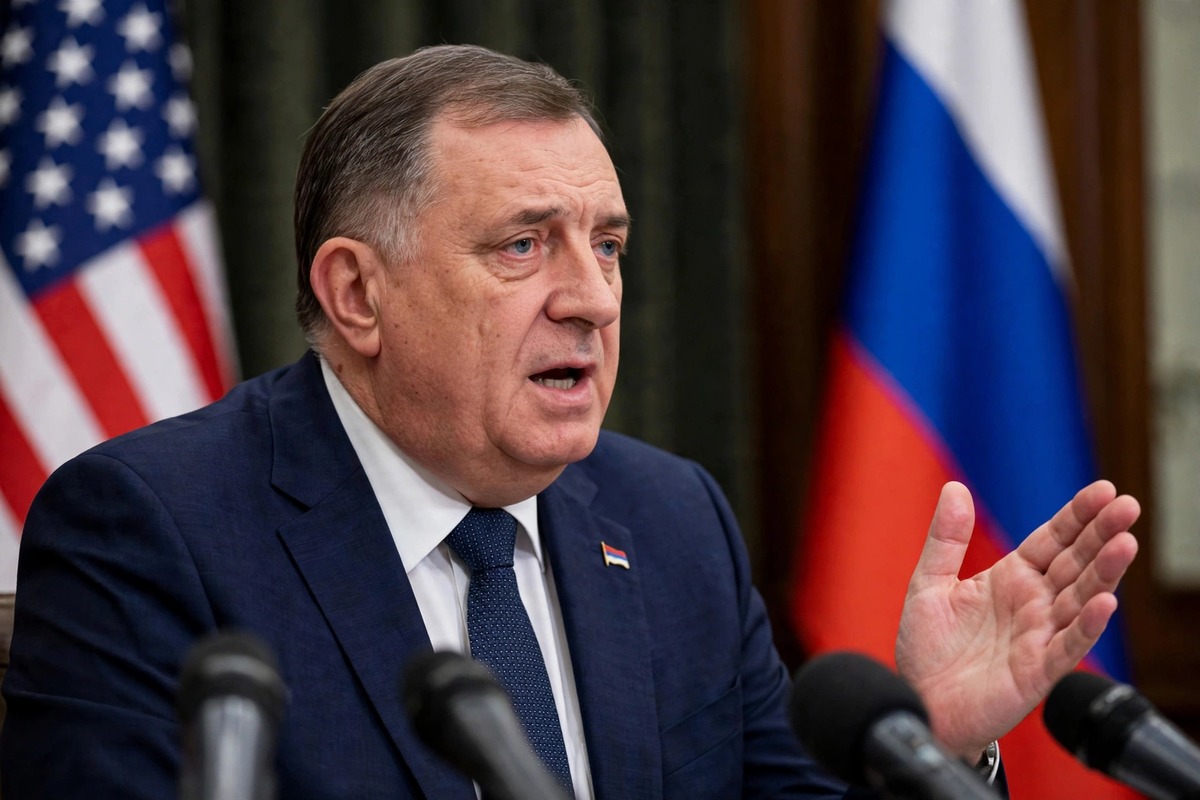
Milorad Dodik, the leader of the ruling Alliance of Independent Social Democrats, is asking both Washington and Moscow to support independence for Republika Srpska, the Serb-led entity inside Bosnia and Herzegovina. In an interview with the Daily Caller News Foundation held days before Bosnia and Herzegovina’s general election, Dodik said he was not simply requesting help from President Donald Trump and Russian President Vladimir Putin. Through a translator, he said he was begging for their support. Dodik argued that five minutes of their attention would make the situation clear. He also said that even if Trump refused to back the project, he would continue supporting the American president. That is an unusual foreign-policy sales pitch: appeal to two rival powers at once, then promise loyalty if one of them says no.
He Puts a Fifteen-Minute Clock on Statehood
Republika Srpska already operates as a significant political entity within Bosnia and Herzegovina. Dodik said internationally recognized independence would let it begin functioning as a separate country almost immediately. His estimate was blunt: fifteen minutes. The proposal is being framed as a bid to create a new Christian nation in Europe, with European Union membership as a possible next step. Dodik said he would consider applying to the EU after independence and argued that Republika Srpska would have a better chance on its own than through Bosnia and Herzegovina. He described the entity as part of the European family. The plan sounds tidy on paper: independence, recognition, then an application. The difficult part is that every step depends on political approval from people who have not agreed to the plan.
Dayton Created a Maze of Leaders
Bosnia and Herzegovina’s political system was created under the Dayton Accords and is built around two main entities, Republika Srpska and the Federation of Bosnia and Herzegovina. The country has three presidents, representing Bosniacs, Croats, and Serbs, while Republika Srpska has its own president. That structure makes every argument about sovereignty more complicated than a normal campaign promise. Željka Cvijanović, identified in the source as the Serb member of the country’s presidency and a former president of Republika Srpska, appeared to echo Dodik during a Friday night rally. According to a translation of her speech, she said Republika Srpska needs the right to hold a referendum. Cvijanović was running for the Serb seat against Marinko Božović and was closely aligned with Dodik and the ruling party.
Dodik Says the Break Would Be Peaceful
Because of the wars that followed the breakup of Yugoslavia, the DCNF asked Dodik whether he could commit to a peaceful secession. He agreed and said avoiding conflict was the only acceptable path. Dodik argued that American approval would be enough to establish the justice of the move and said no one should use force to stop it. He also questioned whether Muslims would dare to use force if the United States gave its approval. His confidence is notable because he previously served as president of Republika Srpska before Christian Schmidt, the former high representative for Bosnia and Herzegovina, removed him from office. The source does not describe a settled independence process. It describes a political campaign built around calls for freedom, liberty, a referendum, and outside support.
Why It Matters
This story matters because a call for independence is not just a local campaign promise. It tests the durability of Bosnia and Herzegovina’s power-sharing system and asks whether one entity can seek to leave while still claiming a place in Europe. The people affected include residents of Republika Srpska, the other entity, and the country’s national institutions. For them, slogans about liberty and justice could become difficult questions about authority, security, and political control.
The bigger picture described by the source is a balancing act between the United States, Russia, and European institutions. Dodik wants American approval, Russian support, and possible European membership, while the Dayton system keeps the country divided into entities with shared leadership. That combination makes the proposal politically significant even before any formal step is taken. It also shows how leaders can use outside powers and democratic language to press for a new political settlement.
The open questions are straightforward but difficult. Would Trump or Putin support independence? Would a referendum actually move forward? Could any secession remain peaceful, as Dodik says he wants? And would the European Union view an independent Republika Srpska as a stronger applicant or as a new complication? The source offers Dodik’s answers, but not the responses from the governments and institutions whose approval his plan would need.
Source: The Liberty Daily