
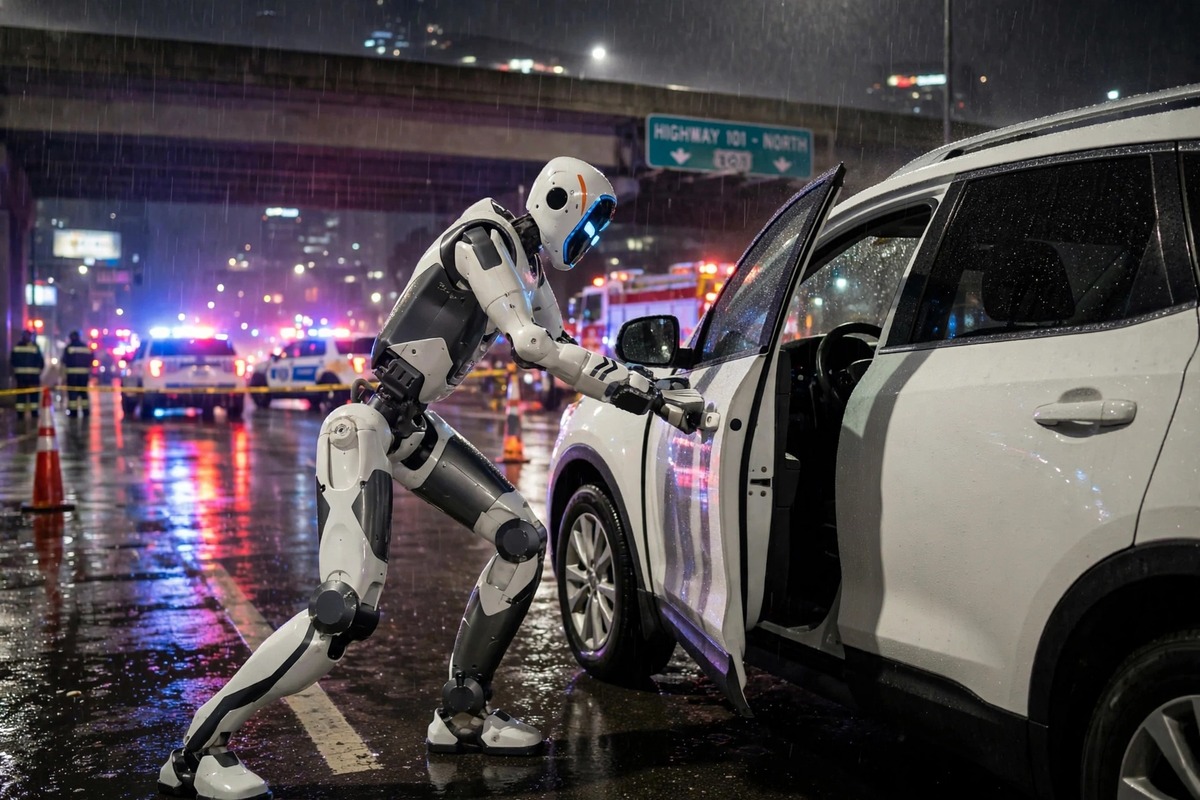
Unitree Introducing: H2-X Kung Fu Legend Guardian🤖
Powerful performance to serve and guard you, with a maximum endurance of approximately 8 hours.
Please use the robot safely and in a friendly manner. pic.twitter.com/5RU5kDzSUK— Unitree (@UnitreeRobotics) October 21, 2026
A Robot Demo With a Familiar Nightmare
Chinese robotics company Unitree unveiled its H2-X in a promotional video Wednesday morning. The footage is presented as a showcase for humanoid robots, but it also invites an unsettling comparison: the source says the machine recalls the “Terminator” movie’s Skynet robots. That does not turn a product video into proof of a combat-ready system. It does explain why the clip has raised questions about dual-use technology, meaning equipment that can serve civilian and military purposes. The larger concern is whether humanoids now moving into ordinary workplaces could eventually be tested or deployed in active war zones. The brochure is upbeat. The question is not.
What Unitree Says the H2-X Can Do
Unitree’s post labels the machine “H2-X Kung Fu Legend Guardian” and says, “Powerful performance to serve and guard you, with a maximum endurance of approximately 8 hours.” It also tells users to operate the robot safely and in a friendly manner. Those words are marketing copy, not an independent performance test, but they show how the company wants the product understood: as a capable humanoid built for service and protection. The promotional framing matters because it puts practical language next to a highly cinematic image. Viewers are not just being shown a robot. They are being asked to think about what the robot might do when the setting changes from a commercial workplace to a security or military environment.
From Workplaces to War Zones
The article ties the video to a BTIG note from last week. That note cited “real-world evidence” that humanoid robots are moving onto factory floors, into warehouses, and behind restaurant counters. In other words, the technology is no longer being discussed only as a distant laboratory idea. It is being presented as something that can enter everyday work settings. The source then makes a more serious connection: based on that movement, it argues that the robots may already be attracting interest from Ukrainian military commanders. Testing may be underway, the article says, or it could begin soon. That is a possibility, not a confirmed report of deployment. Still, the path from factory demonstration to battlefield speculation is exactly why dual-use concerns are becoming harder to dismiss as science-fiction anxiety.
Why It Matters
The important point is not that a promotional video proves the H2-X is ready for combat. It does not. The point is that the same kind of machine is now being discussed in ordinary workplaces and possible military settings. That overlap makes the line between commercial robotics and defense technology harder to draw, especially when the maker uses language about serving and guarding. It also creates a gap between what a product can suggest and what it has actually demonstrated.
Workers may be affected when humanoids enter factories, warehouses, or restaurant counters. Soldiers and civilians could be affected if similar systems are tested in a conflict zone. The source leaves major questions unanswered: Is military testing actually underway? What tasks would a robot be given? Who would set limits on its use? Those questions cannot be answered by a polished clip or a reassuring instruction to be friendly. They require clear evidence and public scrutiny.
The broader issue is speed. A machine can arrive as a commercial product while governments, militaries, workers, and the public are still deciding what rules should apply. That does not make the most dramatic scenario inevitable, but it does make the warning worth taking seriously. Unitree’s demo, the BTIG workplace evidence cited by the source, and the discussion of possible Ukrainian interest all point to an unresolved question: will safeguards keep pace with capability, or will deployment questions be addressed only after the technology is already in use?
Source: The Liberty Daily
