
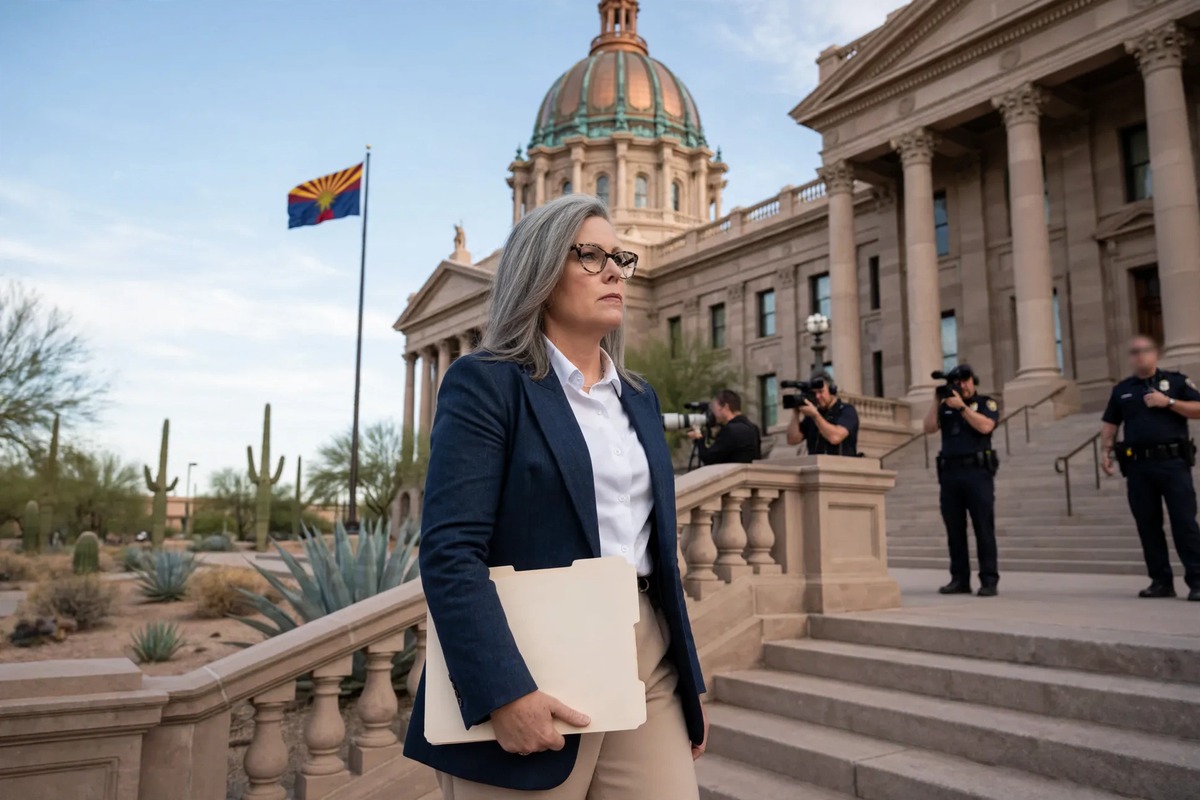
A Governor Already Facing Scrutiny
Arizona Gov. Katie Hobbs is already dealing with a lengthy list of controversies. Reports cited in the account say state officials wired $2 million in tax money to scammers impersonating a title company. Her administration also approved $700,000 for tourism logo and rebranding plans, appointed 13 agency heads without state Senate approval, and saw a series of high-level resignations. It also hired a consultant and an assistant at a cost of nearly $600,000. None of those matters proves the newest allegation, but they form the backdrop for a state Senate investigation that is now focused on political donations, government rates and a company serving children in foster care.
The Sunshine Residential Questions
The latest dispute centers on Sunshine Residential Homes, which operates group homes for children and youth in Arizona’s foster care system. State Sen. Jake Hoffman says the company’s executives and others contributed more than $500,000 to benefit Hobbs, her political operations and various funds. Hoffman says Sunshine then received per-child rate increases amounting to a 56% hike, making it the highest-paid group home provider in the state. The allegation is especially pointed because internal staff reportedly noted that no increase was necessary. In plain English, the claim is that political money went in and taxpayer-funded payments came out. That is the kind of sequence that tends to attract subpoenas, especially when the money involves care for vulnerable children.
The Senate Expands Its Investigation
Hoffman announced the investigation and said subpoenas had been issued to people involved in the matter. Their testimony is expected at a hearing before the Senate Government Commission later this month. Former Arizona Supreme Court Justice Andrew Gould has been named special counsel for the Senate’s investigation into Attorney General Kris Mayes’ decision not to prosecute Hobbs over the pay-to-play allegations. Hobbs and Mayes are both Democrats. A spokesman for Hobbs’ campaign called the investigation political, while Hoffman said the facts have every appearance of a pay-to-play corruption scandal at the highest levels of state government. Those opposing descriptions are now headed toward a public clash over the same paper trail.
Why It Matters
This matters because the allegation tests whether public money and political access were kept in separate lanes. Sunshine serves children and youth in foster care, so the dispute is not just about campaign finance paperwork. It is also about whether a provider serving vulnerable young people received a financial advantage without a documented service need. Taxpayers are left to wonder whether the rate decision reflected actual costs, political influence, or some mix that investigators must sort out.
The broader pattern matters too. The source describes earlier controversies involving state spending, appointments, resignations and paid personnel. None of those issues proves this allegation. Together, however, they help explain why lawmakers are treating the Sunshine matter as part of a larger accountability question rather than a routine budget disagreement. A subpoena and public hearing bring the executive branch’s explanation into a setting where the timeline, the money and the decision-making record can be examined.
The open questions are straightforward, even if government answers rarely are. What did contributors expect, who approved the increase, why did internal staff reportedly see no need for it, and what evidence supports or undermines the pay-to-play claim? The campaign calls the investigation political. The Senate says the matter warrants testimony. The hearing may clarify whether the sequence was ordinary policy, favoritism, or something more serious.
The Hearing Will Test the Paper Trail
Hobbs has received a subpoena directing her to appear before the Senate Government Commission later this month. Her testimony, along with the testimony of other people subpoenaed by the Senate, will put the contribution timeline and the rate decision under public examination. The central question is not whether political donations are legal in the abstract. It is whether those donations were connected to a rate increase that benefited a major donor despite staff concerns that no increase was needed. Until the investigation weighs the evidence, the pay-to-play charge remains an allegation. But the Senate has made clear that it does not intend to let the issue disappear behind campaign talking points.
Source: The Liberty Daily
