
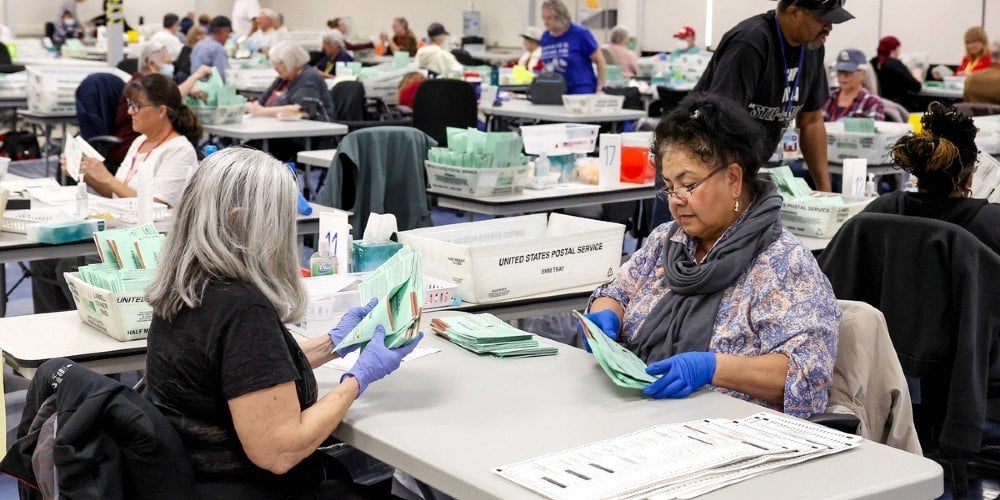
Work Stops at the Postal Service
Postmaster General David Steiner said Thursday that the U.S. Postal Service has stopped developing an online portal tied to President Donald Trump’s effort to tighten mail-voting rules. “There’s an injunction, so we’re not doing anything,” Steiner said. The portal had been planned for unveiling this week, but the court order put that schedule on ice. A fast government technology project followed by an immediate legal stop is a remarkably efficient way to produce paperwork without producing a launch. Steiner said the system was central to carrying out the Postal Service’s new responsibilities under the rule.
An Injunction Keeps the Rule Frozen
The Supreme Court on Monday declined to lift a nationwide injunction blocking the Postal Service rule. That leaves the rule on hold for the 2026 midterm elections and allows states to keep sending mail ballots through the processes they have used for years. The injunction came from U.S. District Judge Indira Talwani of Massachusetts, who issued it on Sept. 4 after extending a temporary restraining order granted on Aug. 27. The Trump administration had filed an emergency application on Sept. 6 asking the justices to pause Talwani’s order. For now, that request did not clear the legal roadblock.
What the Postal Rule Would Require
The blocked rule contained several mandatory requirements. States would have to provide the Postal Service with lists of mail-ballot recipients, and every outbound and return ballot envelope would have to carry a unique barcode. The Postal Service could also refuse to deliver ballots that failed to meet the new standards or were connected to voters who did not appear on the lists. The final rule was published on Aug. 26 to implement an executive order Trump signed in March. All 50 states allow some form of mail voting. The source report says 29 states let voters request a mail ballot without giving a reason, while eight states conduct elections entirely by mail. That makes the fight over envelopes, lists, and barcodes more than a dispute over office software.
Steiner Defends the Speed of the Build
Sen. Richard Blumenthal, a Connecticut Democrat, wrote to Steiner on Aug. 31 after receiving what he described as an alarming whistleblower disclosure. Blumenthal called the portal’s rollout a “perilously rushed and potentially unlawful implementation” of Trump’s order. Steiner said he had read portions of the report but remained confident in the employees building the system. “There’s absolutely no doubt that we worked fast,” he said. “My personal opinion is it was a monumental task and I’m very proud of our IT department for being able to do it that fast.” Steiner also declined to say whether he supported Trump’s policy. He said he was the head of an “independent agency of the executive branch” and was focused on operational concerns. As he put it, he did not decide which rules the agency had to accept. He looked at the issue from the “execution side.”
The Policy’s Election Integrity Argument
Trump’s executive order said the federal government had a duty to maintain public confidence in election results and that additional safeguards were needed for ballots sent through the mail. The order described secure envelope identifiers as a reliable and auditable way to enforce federal law without unduly burdening eligible voters. It also said unique identifiers, including barcodes, could help confirm that only citizens received and cast ballots, reducing the risk of fraud and protecting election integrity. The Supreme Court’s decision means the order will not govern this year’s election through the blocked Postal Service rule. Justice Brett Kavanaugh indicated, however, that he might favor the administration if the issue returns to the court later. The portal is paused, the rule’s mandatory provisions remain blocked, and the legal argument over federal control of mail voting is still waiting for its next hearing.
WE’D LOVE TO HEAR YOUR THOUGHTS! PLEASE COMMENT BELOW.