
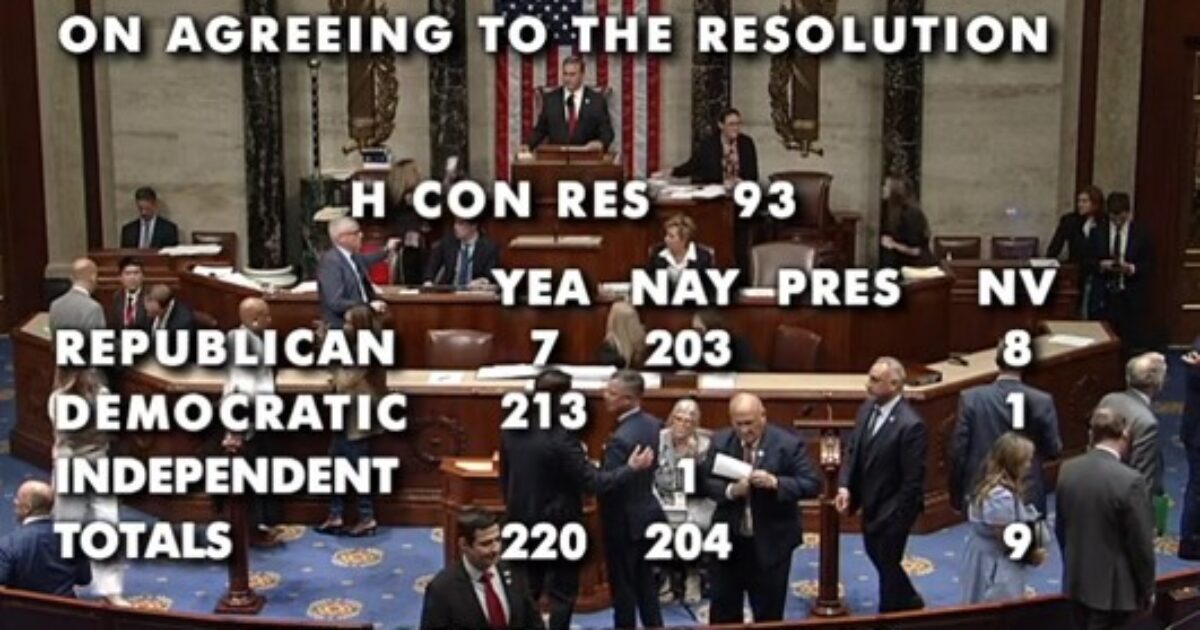
The 7 GOP 'Yes' votes for a war powers resolution:
Barrett MI
Davidson OH
Fitzpatrick PA
Massie KY
Mace SC
Miller-Meeks IA
Nunn IA🚨🚨 Two Iowa Republicans voting to withdraw US military forces 🚨🚨
— Jamie Dupree (@jamiedupree) September 16, 2026
Seven Republicans Break With Trump
The House of Representatives voted 220-204 late Tuesday on a resolution ordering President Trump to end hostilities with Iran. The conflict began without congressional approval, according to the source report. Seven Republicans joined all 213 Democrats in supporting the measure. The only other member voting against it was Independent Rep. Kevin Riley, who caucuses with Republicans. Eight Republican members were absent. The resolution was introduced by Rep. Seth Moulton, a Democrat from Massachusetts, and co-sponsored by 14 fellow Democrats. The number of Republican defections was larger than expected, giving the vote more weight than a routine party-line disagreement.
The Seven Republicans Who Broke Ranks
The seven Republicans were Tom Barrett of Michigan, Warren Davidson of Ohio, Brian Fitzpatrick of Pennsylvania, Thomas Massie of Kentucky, Nancy Mace of South Carolina, Marinette Miller-Meeks of Iowa, and Zach Nunn of Iowa. Four of them, Miller-Meeks, Nunn, Fitzpatrick, and Barrett, are running in competitive races. Two of the Republicans who voted against Trump are from Iowa. Massie, Mace, and Davidson are already known for breaking with Trump and House Republican leadership on major issues. That makes the lineup notable for both its size and its political geography. This was not simply a revolt by the party’s usual dissenters, since several members facing difficult races also crossed over.
Why Iowa Matters
The Iowa votes may draw the most attention inside Republican circles. If Iowa Republicans believe they must defy the president on a major foreign-policy question, the vote could signal trouble for the party’s midterm prospects in the state. The Senate race in Iowa is currently described as a dead heat, adding another layer of pressure to the two Iowa lawmakers who supported the resolution. A House vote cannot decide that Senate contest, but it does put the disagreement over the Iran war directly into the state’s political conversation before voters head to the polls.
Barrett Ties His Vote to War Powers
Before the vote, Barrett told Fox News why he planned to oppose the president’s position. “I’ve been consistent on that since the war powers provision expired after 60 days of engagement,” he said. His explanation presented the vote as part of a longer argument over the limits of presidential military action, rather than as a sudden break. The House passed a similar resolution in June, when four Republicans joined Democrats. The Senate later voted to block that measure, so the latest House action renews a dispute Congress has already taken up once this year.
The Senate Vote Would Set Up a Veto
The New York Post reported that this is likely to be the last congressional action connected to the Iran war before the Nov. 3 midterm elections. The next step would be a Senate vote. If the Senate passes the resolution and sends it to Trump’s desk, he will almost certainly veto it. That outcome would leave the House vote as a clear statement of opposition, while also highlighting the split among Republicans over the president’s handling of the conflict. The vote has therefore put foreign policy, war powers, and several competitive races on the same political calendar.
WE’D LOVE TO HEAR YOUR THOUGHTS! PLEASE COMMENT BELOW.