
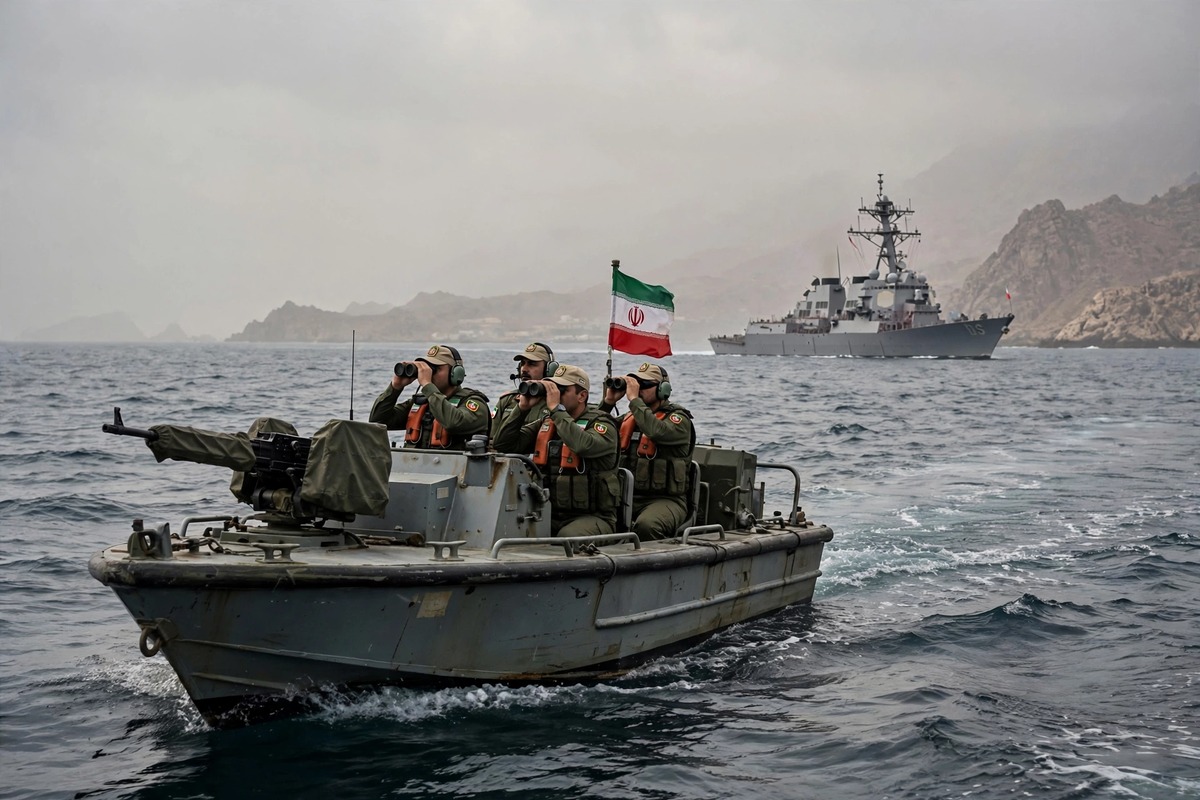
Iran’s Second Attack in Three Days
The Liberty Daily reported that Iran fired drones at Bahrain early Sunday, marking its second attack on the Gulf kingdom in three days after a lull that had lasted since September. The country hosts the U.S. Navy’s Fifth Fleet, making it a familiar target in the wider confrontation between Tehran and Washington. The Islamic Revolutionary Guard Corps said six drones targeted a U.S. air-defense radar system at the Al-Riffa helicopter base. The Guards described the operation as the second phase of their response to hostile American actions and warned that further aggression would bring an even stronger response. Iranian state television carried the statement and released footage of the launches. Months of diplomacy have produced no breakthrough, leaving the diplomatic process looking less effective than the drones it has failed to stop.
Bahrain Says Its Defenses Stopped the Drones
The Bahrain Defence Force said Iran was continuing a systematic hostile campaign against the kingdom. It reported that Bahraini air defenses intercepted the drones before they reached their targets. There were no immediate reports of injuries or damage. Explosions were heard over the island around four in the morning, followed by another series of blasts around six-thirty, according to the report. Bahrain’s Interior Ministry issued two nationwide alerts, its first such warnings since September, telling citizens and residents to remain calm, move to the nearest safe location, and follow official news channels. Bahrain’s Foreign Ministry said the kingdom rejected having its territory turned into an arena for settling scores and held Iran responsible for the Friday and Sunday attacks and their consequences.
Conflicting Claims Follow Friday’s Strike
The latest attack follows a dispute over an earlier incident. On Friday, the Guards claimed they had destroyed a U.S. early-warning radar in Bahrain in retaliation for American strikes on a telecommunications tower in Sirik, southern Iran. U.S. Central Command disputed that account, saying American forces shot down both drones launched toward Bahrain and that there were no injuries or damage. The competing statements show how quickly a military exchange becomes an information contest. One side claims a successful strike, while the other says the weapons never reached their target. For residents, the practical result is the same: explosions, emergency alerts, and another round of official explanations.
Hormuz Warning Puts Shipping on Notice
The attacks are part of a larger escalation that began after the United States and Israel attacked Iran on February twenty-eighth. Tehran then fired thousands of missiles and drones at Gulf states hosting American forces, with Bahrain among the hardest hit. Those attacks had mostly declined until Friday. On Sunday, the Guards added a warning for shipping, declaring, “The Strait of Hormuz is closed.” The IRGC Navy separately claimed that two oil tankers struck naval mines south of the strait, though maritime authorities had not verified the claim. The Guards also said three more tankers were hit in the strait on November tenth. Iran said the next day that it had struck Oman’s Didamar Island, whose lighthouse and radar help guide tankers through the southern lane. Saudi Arabia condemned the attacks as violations of international law. Its air defenses also intercepted two ballistic missiles fired toward Riyadh by Yemen’s Iran-backed Houthis, along with drones over the Eastern Province.
Why It Matters
This matters because the reported strikes are not isolated pieces of theater. Bahrain hosts the U.S. Fifth Fleet, and the account places American defense systems, Bahraini air defenses, local residents, and commercial shipping inside the same widening pressure campaign. A drone intercepted before impact can still force alerts, disrupt daily life, and raise the cost of keeping forces and trade routes in place. The immediate absence of injuries or damage is welcome, but it does not erase the strategic risk.
For Bahrain, Iran’s actions are described as a sovereignty issue, not merely a quarrel between Tehran and Washington. The kingdom says it will not accept its territory being used to settle scores. That position puts Bahrain in a difficult lane: it hosts U.S. forces but is also the country dealing with incoming drones and public warnings. The source shows similar pressure on Gulf neighbors, with Saudi Arabia condemning the attacks and defending against projectiles linked to Yemen’s Houthis.
The open questions are what Iran means by declaring Hormuz closed, whether the mine claims will be verified, and whether diplomacy can produce anything more than another pause. Those answers matter to sailors, residents, and governments alike. If claims, interceptions, and warnings keep arriving faster than clear verification, official statements become part of the conflict rather than a reliable map through it.
Source: The Liberty Daily
