
A Rare-Earth Pinch Hits the Engine Room
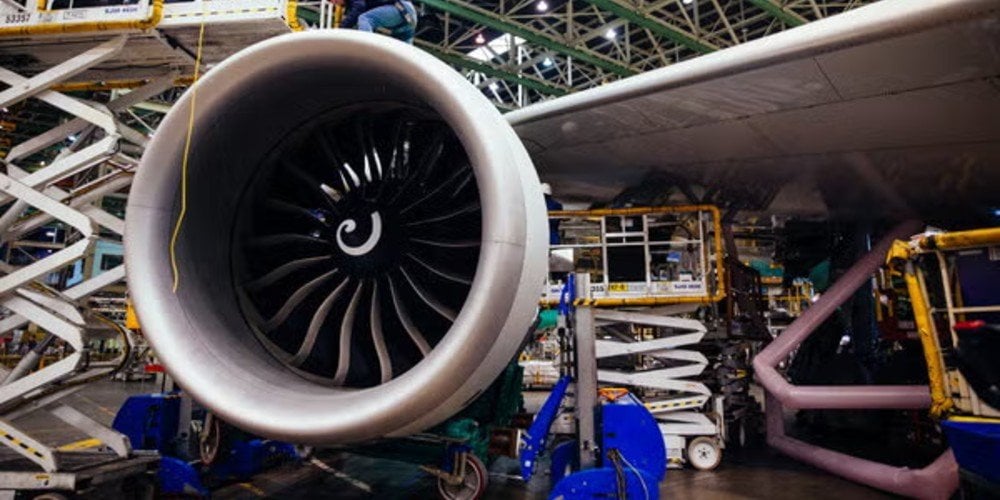
America’s aerospace industry is dusting off decades-old technology after China’s export controls squeezed supplies of yttrium. The rare-earth metal is used in heat-resistant coatings that protect turbine blades, vanes and other jet engine components from extreme temperatures. The U.S. Geological Survey says Beijing directly supplied about 70% of U.S. yttrium imports between 2021 and 2024. Anupam Ghildyal, chief growth officer at REAlloys Inc., told the Daily Caller News Foundation, “There’s a huge shortage of yttrium, which is used for making turbine coating inside every jet engine.” He added, “Without that, they can’t build jet engines.” That gives a small industrial material a rather oversized seat at the table.
Old Coatings Make a Return
The shortage is forcing aerospace suppliers to reconsider technologies from the 1970s and 1980s. Companies are testing zirconium-dioxide coatings stabilized with magnesium or calcium instead of yttrium. Some are also trying to recycle coating material. Chinese yttrium shipments to the United States plunged after Beijing imposed export controls, while prices rose and some coating suppliers rationed material or temporarily halted production. GE Aerospace, Pratt & Whitney and Honeywell declined to comment to Reuters at the time, though aerospace supply-chain specialist Kevin Michaels said low inventories had not yet reduced engine production. In other words, the warning light is on, even if the engine has not started smoking.
Suppliers Are Hunting for Workarounds
Oerlikon Surface Solutions, a major supplier of aerospace and turbine coatings, uses yttrium in thermal-barrier coatings designed to protect engine components from extreme heat. China’s restrictions pushed the company to seek alternative supplies. Dattatraya Kamatkar, Oerlikon’s global head of sourcing, said the company had to “get creative” securing yttrium oxide. That effort includes recycling material from its manufacturing process, working with U.S. suppliers and coordinating with the federal government. The pressure also reaches GE Vernova, a major gas-turbine manufacturer. The company began working with the U.S. government to increase its yttrium stocks after Chinese restrictions disrupted supplies. CEO Scott Strazik said GE Vernova had enough inventory to carry it into 2026, but managing availability had become a daily focus. The company is also investing in alternative materials.
The Problem Reaches Across Engine Families
Honeywell is another major supplier of thermal-barrier coatings for aircraft and industrial gas-turbine engines. The company says its main aerospace coating is 6% to 8% yttria-stabilized zirconia, a ceramic material that contains yttrium. Honeywell’s catalog lists coating services for components used in several major GE Aerospace and CFM engine families, including the GE90, GEnx, LEAP and CF34, along with the military F110. Honeywell describes itself as a developer, supplier and repair and overhaul center whose coatings are used by aircraft and industrial turbine-engine producers and operators. That means the supply issue is not limited to one company’s engine line. It runs through a wider network of manufacturers, repair shops and operators.
The Weak Link Is Processing
America’s rare-earth vulnerability did not begin with a lack of rare-earth-bearing material in the ground. The bigger problem is the capacity to process that material into usable industrial products, which has become concentrated overseas. Abigail Hunter, executive director of SAFE’s Center for Critical Minerals Strategy, told the Daily Caller News Foundation, “A permanent magnet and rare earth supply chain is only as strong as its weakest link, and nearly every stage today sits in the hands of a strategic adversary.” That concern helps explain the scramble for domestic suppliers, recycled material and substitute coatings. Oerlikon, Honeywell, GE Vernova, GE Aerospace and Pratt & Whitney did not respond to the Daily Caller News Foundation’s requests for comment.
WE’D LOVE TO HEAR YOUR THOUGHTS! PLEASE COMMENT BELOW.